Life-Mapping
Personal Development
.jpg) Life-Mapping
is a Personal Development Method designed to help people find their way
in life, encompassing nine major areas. Out of these, the First Step
course will focus on three transversal areas:
PROFESSIONAL AREA: Career Development – young people and not only find themselves lost in the web of choices and obstacle
.JPG) s in choosing
the right job.
Many of them take a summer job that slowly turns into a swamping long-term job that they can never seem to get out of, and some even get a job they
later discover they don’t like, while others take the job
their
parents want them to take, and live to regret it. Career development
provides tools for connecting personal strengths and skills with the
labour market, tools to help you discover what suits you best,
instruments to plan and develop your career.
SOCIAL AREA: Soft Skills
.JPG) Development–To
be
successful in society and your line of work nowadays requires a set of
widely required soft skills: Leadership & Followship (TeamWork),
Effective communication and Active listening, Thinking out-of-the-box,
innovativeness, to name just a few. Soft Skills development in Life-Path
comes within the framework of a 360 degrees self-analysis and targets
the most useful soft skill set for each individual.
PERSONAL AREA: Personal Finance Planning and Self-Management, Time Management – When asked what they want from life, most youngsters would say either happiness or success. If asked wha
.jpg) t they need in
order to achieve
that, they would quickly say: „Lots of money”. Most
of them
will try hard to make money, and waste their lives in the process,
gaining neither happiness, nor success. Some of them will get money
from their parents or will actually manage to make it, and after more
than half a life they will discover that money is not getting them
anywhere near happy. Few will actually understand that money by itself is not an objective, but a means to reach your real
objectives. Fewer still will understand that happiness and success do
not depend on how you manage your money, but on how you manage your
time. Both sound personal finance planning and time-management are key
to achieving your objectives in life.
MODULE STRUCTURE
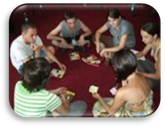 The training consists
of 12
sessions, each session of 90 minutes. The ideal number of participants
is between 8 and 12. It is recommended that the participants are from
the same age group, social and educational background. This course has
the best impact on students, aged 20-25.
Timeframe: 4-day course, 6 hours per day. The schedule and times can be adjusted.
REQUIREMENTS:
.jpg) -
A good level of
English
- The participants must be genuinely interested in this course. A pre-course selection is recommended. Typically 25% of students are genuinely interested while more than 50% will claim to be.
- Full attendance.
COURSE STRUCTURE:
Personal development process in the Life-Path method:Session 1: G2KEG - Getting to know each other, management of expectations, course objectives and schedule - You ask me how much education costs, I ask you how much it costs not to educate. (Winston Churchill)
Session 2: Life-Path – what is it and why do we need it? Understanding the steps - A man asked a kid to write down what he wanted to be when he grew up. He wrote he wanted to be happy. The man said he didn't understand the task. He said he didn't understand life...
Session 3: Motivation - What motivates me? - People often say that motivation doesn't last. Well, neither does bathing! That's why we recommend it daily. (Zig Ziglar)
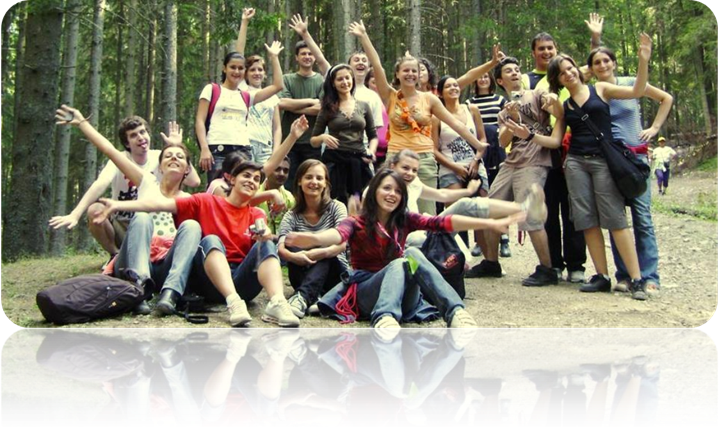 Session
4: 360 degrees Soft Skills analysis - Discovering what you want to do with/in your life. Everybody dies. Not everybody really lives
Session 5: Soft Skills Analysis – What are the skills we lack in order to achieve our goals? - Obstacles are what you see when you take your eyes off your goals. (Brian Tracy)
Session 6: Wheel of Life - discovering/setting areas of personal development - The best things in life are not things.
.JPG) Session 7: Goal
Setting -
establishing objectives and means of achieving them - It never fails to
amaze me that most people spend more time planning a vacation than
their own life – Kristina Crowley
Session 8: Time Management – tools for time management, prioritisation, evaluation -The only difference between a rich person and a poor person is how they use their time. (Robert Kiyosaki)
Session 9: Personal Finance Planning – tools for personal finance forecasting and management -Empty pockets might slow you down. An empty heart will stop you. An empty head will prevent you from even starting. (Teolin)
Sessions 10-11: Life-Coaching (helping someone on a 1-2-1 basis to walk his/her own lifepath) – individual sessions - Success is not measured by how far you sailed but by the storms you have encountered, and the determination of your sail
Session 12: Evaluation. A year from now you will wish you had started today. (Karen Lamb)
METHODS USED:
.JPG) The Life-Path
Training uses the
Non-Formal Education methodology, as defined by the Council
of
Europe and European Commission.
Non-Formal Education is an experience-based learning framework, through games and participative activities, with very little focus on presentations.
The methods used and the substructure of the course are subject to adaptation to the needs and expectations of the participants.

 Comment or interact on:


Personal development is a process of individual self-development and the development of others. At the level of the individual, personal development includes goals, plans or actions oriented towards one or more of the following aims:
- improving self-awareness
- improving self-knowledge
- building or renewing identity
- developing strengths or talents
- identifying or improving potential
- building employability or human capital
- enhancing lifestyle or the quality of life
- fulfilling aspirations
- defining and executing personal development plans
What is Non-Formal Education?
Any organised educational activity outside the established formal system - whether operating separately or as an important feature of some broader activity - that is intended to serve identifiable learning clienteles and learning objectives.